riwaya.

riwaya.🇲🇦
We use cookies to improve your experience, analyze our traffic, and offer you personalized offers. Learn more in our Privacy Policy.
Robert Kiyosaki
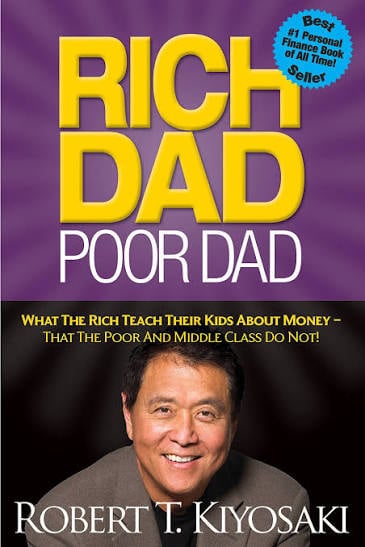
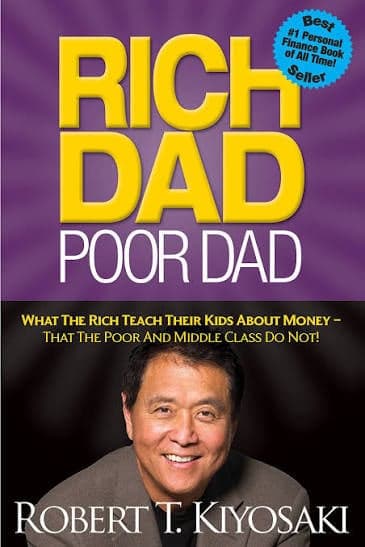
"Rich Dad Poor Dad" by Robert Kiyosaki is one of the best-selling personal finance books of all time. Through the contrasting stories of his two father figures…
"Rich Dad Poor Dad" by Robert Kiyosaki is one of the best-selling personal finance books of all time. Through the contrasting stories of his two father figures…
This article was written by Sarah Jenkins.
First published in 1997, "Rich Dad Poor Dad" by Robert Kiyosaki has sold over 40 million copies worldwide and has been translated into dozens of languages. It consistently ranks among the top personal finance books ever written, and for good reason: it does not just teach you about money. It fundamentally challenges the way you think about it.
The book is built around a simple but powerful contrast. Kiyosaki grew up influenced by two very different men. His biological father, the "Poor Dad," was a highly educated government employee who believed in getting good grades, finding a stable job, and saving money. His best friend's father, the "Rich Dad," was a businessman with little formal education but an extraordinary understanding of how money works.
Through their contrasting philosophies, Kiyosaki reveals why so many hardworking, educated people struggle financially their entire lives, while others with less education build lasting wealth. The answer, he argues, lies not in how much money you earn, but in what you know about money and what you do with it.
This is not just a book about getting rich. It is a book about thinking differently, breaking free from the conventional "go to school, get a job, work hard" formula, and learning to make your money work for you instead of working for your money.
Carefully selected books for all tastes at the best prices.
Robert Toru Kiyosaki is an American entrepreneur, investor, and author born in Hawaii in 1947. He served as a Marine Corps officer and helicopter gunship pilot in Vietnam before entering the business world. After various entrepreneurial ventures, he founded the Rich Dad Company, a financial education company that has since become a global brand.
Beyond "Rich Dad Poor Dad," Kiyosaki has authored over 25 books, many of which have also become bestsellers. His core mission throughout his career has been to provide financial education to people who were never taught about money in school or at home.
Kiyosaki is a polarizing figure. His admirers credit him with changing their financial lives and opening their eyes to a completely different way of thinking about wealth. His critics question some of his specific financial advice and note that his methods would not work for everyone in every situation.
What is undeniable, however, is that his central message — that financial literacy is a skill that can and must be learned, and that the traditional path of education and employment is not the only road to financial security — has resonated with tens of millions of readers across every generation and culture.
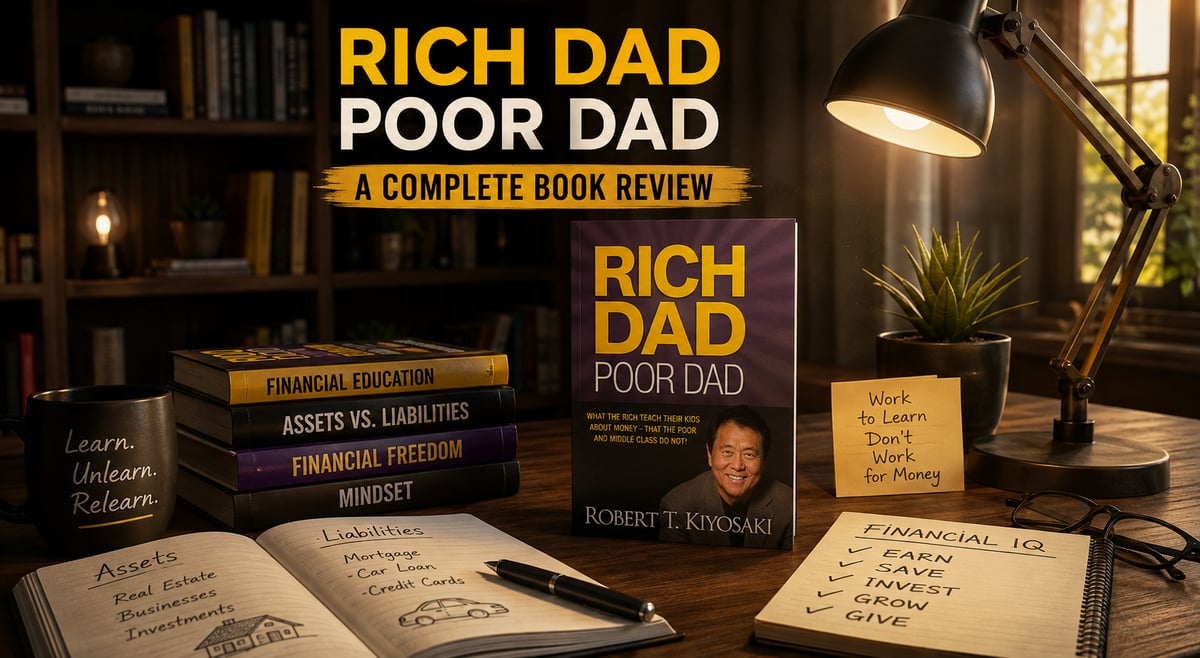
At the heart of "Rich Dad Poor Dad" lies one fundamental concept that Kiyosaki argues the wealthy understand and the poor and middle class do not: the difference between an asset and a liability.
Kiyosaki defines these terms in a refreshingly simple way. An asset is something that puts money in your pocket. A liability is something that takes money out of your pocket. By this definition, your house, your car, and most consumer purchases are liabilities, not assets, even if conventional wisdom tells you otherwise.
The rich, he explains, spend their lives acquiring assets: businesses, real estate that generates rental income, stocks, intellectual property. The poor and middle class spend their lives acquiring liabilities while believing they are assets. They buy bigger houses, newer cars, and luxury goods on credit, creating a cycle of debt that keeps them perpetually working to pay bills.
Kiyosaki introduces the concept of the "Rat Race" to describe this trap: you work for money, you spend money, you need more money, so you work harder. The rich, by contrast, make their money work for them. Their assets generate income passively, eventually replacing the need to work for a salary entirely.
This single shift in perspective — from thinking like an employee to thinking like an investor — is the central transformation the book asks of its reader. It is simple to understand, but profoundly challenging to actually implement, which is exactly why Kiyosaki spends the rest of the book unpacking how to do it.
Beyond the central assets vs. liabilities framework, "Rich Dad Poor Dad" delivers several powerful financial lessons that have resonated with millions of readers:
The importance of financial education Kiyosaki argues passionately that schools teach us almost nothing about money. We learn history, mathematics, and literature, but we never learn how to read a financial statement, understand taxes, or make investments. This gap in education, he argues, is why so many educated people struggle financially while people with less formal schooling sometimes thrive.
Work to learn, not just to earn One of the most counterintuitive ideas in the book is that you should sometimes take a job not for the salary, but for the skills it will teach you. Kiyosaki encourages readers to build a diverse set of skills: sales, marketing, communication, accounting, and management. These skills compound over time and create far more value than any single paycheck.
Overcome fear and laziness Kiyosaki is unusually direct about the psychological barriers that keep people from building wealth. He argues that fear of losing money and a comfortable but limiting laziness are the two biggest enemies of financial success. The solution is not to eliminate fear, but to learn to act in spite of it.
Pay yourself first One of the most practical pieces of advice in the book is to pay yourself first, meaning you save and invest a portion of every paycheck before paying bills or expenses. This forces you to find creative ways to cover your costs and builds your asset column steadily over time.
Use corporations and tax laws to your advantage Kiyosaki explains how the wealthy legally use corporate structures to reduce taxes and protect assets. While this section requires caution and professional advice, the core message is that financial literacy includes understanding the legal tools available to you.
One of the strongest aspects of "Rich Dad Poor Dad" is the way it is written. Rather than presenting dry financial theory, Kiyosaki tells his story. The contrast between his two "fathers" creates a natural narrative tension that keeps you reading, wanting to know whose philosophy will prove correct.
The writing is conversational, direct, and occasionally blunt. Kiyosaki does not mince words when criticizing the conventional educational and financial system. This boldness is part of what makes the book feel refreshing and even rebellious to many readers.
The analogies he uses are brilliantly simple. The Rat Race. The Cash Flow Quadrant. The concept of money working for you. These mental models are easy to understand and even easier to remember, which is why they have become part of the everyday vocabulary of the personal finance world.
The book is also relatively short and can be read in a few sittings. It does not overwhelm you with spreadsheets, complex formulas, or technical jargon. Instead, it focuses on changing your mindset, which Kiyosaki argues is the necessary first step before any practical financial action can succeed.
This accessibility is both the book's greatest strength and, for some critics, its greatest weakness. Some financial experts argue that the book oversimplifies complex topics. But for a first introduction to financial thinking, that simplicity is exactly what makes it so powerful for so many people.
"Rich Dad Poor Dad" is one of those rare books that can genuinely benefit almost anyone, regardless of their current financial situation. However, certain readers will find it particularly transformative:
Young adults just starting their careers who want to understand the financial system before they get locked into patterns that are difficult to break later. The earlier you read this book, the more time you have to apply its lessons.
Employees who feel trapped in the Rat Race, working hard but never getting ahead, always living paycheck to paycheck despite earning a decent salary.
Anyone who grew up with a conventional view of money — go to school, get a job, save money, retire — and is beginning to question whether that path will actually lead to financial security.
Aspiring entrepreneurs who want a mindset framework for thinking about business, investment, and financial independence before diving into the practical details.
Parents who want to start teaching their children about money in a way that schools never will. Many readers report giving this book to their teenagers.
Anyone who has ever felt intimidated by investing, real estate, or financial planning, and wants a non-technical, story-driven introduction that makes these subjects feel approachable.
It is worth noting that "Rich Dad Poor Dad" is a mindset book, not a how-to manual. Readers looking for specific investment strategies or step-by-step financial plans should supplement it with more technical resources. But as a foundation for financial thinking, it remains one of the best starting points available.
Rich Dad Poor Dad deserves its place as one of the most influential personal finance books ever written. It has introduced millions of people around the world to concepts that were never taught in schools: the difference between assets and liabilities, the power of financial education, and the mindset required to build lasting wealth.
The book is not a detailed financial plan. It does not give you stock picks, real estate formulas, or investment blueprints. What it does give you is something arguably more valuable: a new way of thinking about money, work, and financial independence.
For anyone who has never questioned why they work for money rather than making money work for them, this book is a genuine eye-opener. It challenges deeply held beliefs about job security, home ownership, and the definition of success.
Rating: 4.5 / 5
Rich Dad Poor Dad is an essential starting point for anyone beginning their journey toward financial literacy. Read it with an open mind, take the ideas seriously, and use it as a springboard to deeper financial education. It may very well change the way you see the world.
Rich Dad Poor Dad has had a major influence on popular financial education because it encourages readers to question traditional assumptions about employment, income and wealth. The distinction between assets and liabilities is one of the ideas that many readers remember after finishing the book.
However, Kiyosaki's approach can be provocative and should not be treated as universally applicable financial advice. Different countries have different tax systems, labor markets, property markets and investment regulations.
Our conclusion is therefore balanced. The book can be an excellent introduction to financial thinking, particularly for someone who has never seriously considered how wealth is built. But it should be the beginning of financial education rather than the end. Readers should verify specific financial claims and complement the book with more technical and context-specific sources.
Be the first to comment!