riwaya.

riwaya.🇲🇦
We use cookies to improve your experience, analyze our traffic, and offer you personalized offers. Learn more in our Privacy Policy.
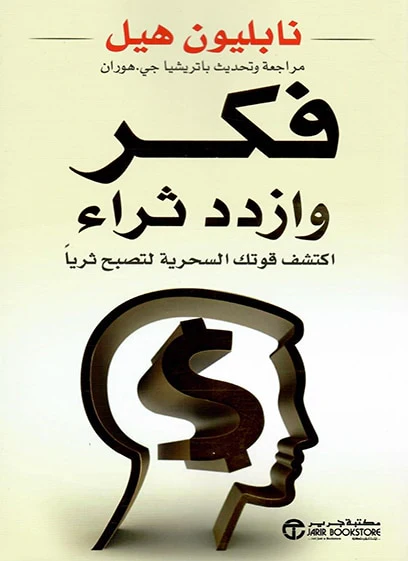
نابليون هيل
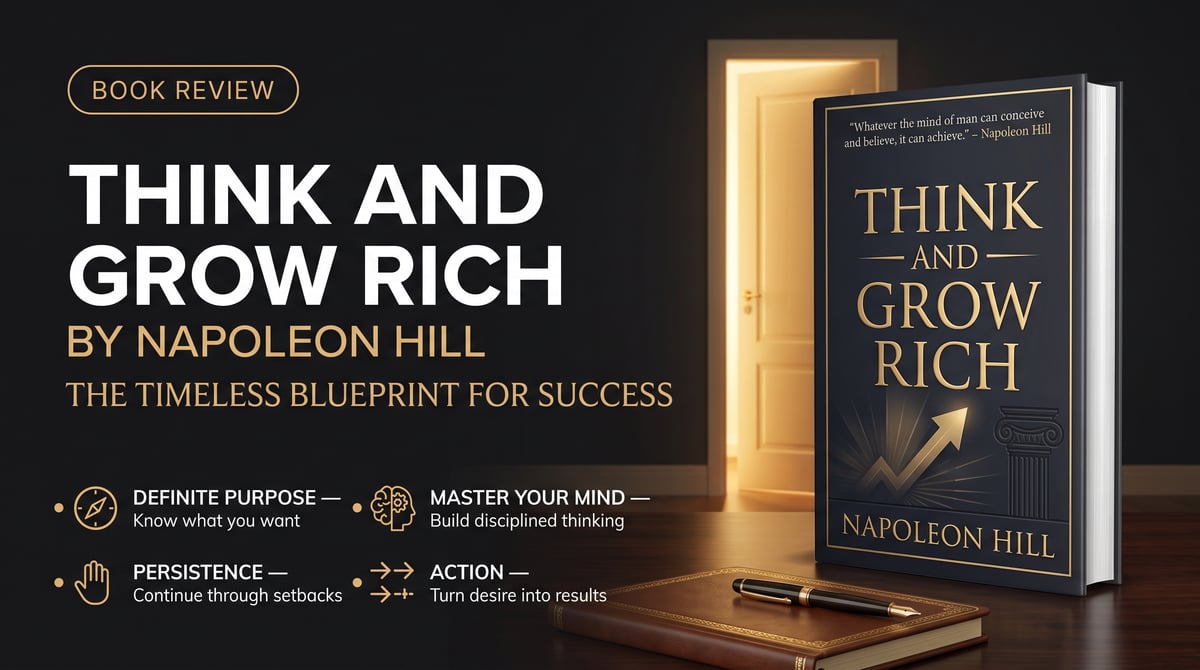
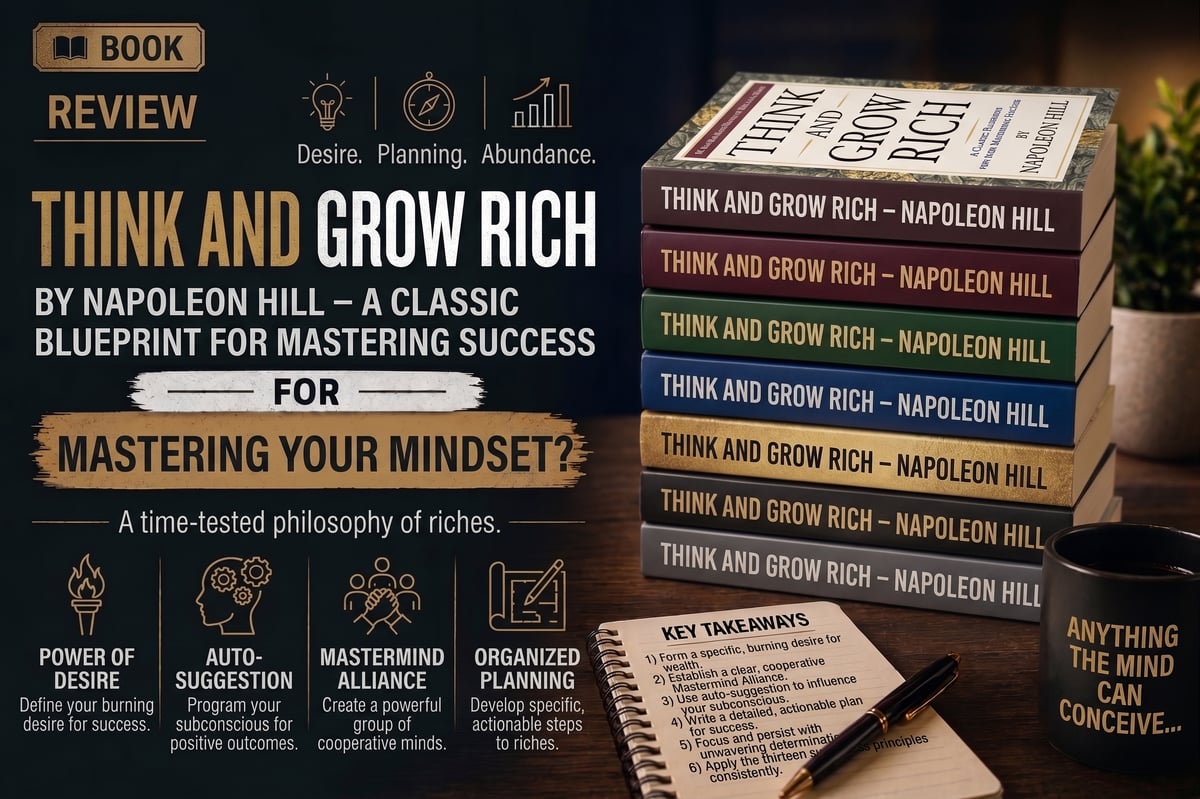
Think and Grow Rich by Napoleon Hill is one of the best-selling and most influential self-help books ever written. First published in 1937, it has sold over 100…
Think and Grow Rich by Napoleon Hill is one of the best-selling and most influential self-help books ever written. First published in 1937, it has sold over 100…
This article was written by Sarah Jenkins.

Published in 1937, Think and Grow Rich is the result of over twenty years of research by Napoleon Hill into the habits, beliefs, and philosophies of the most successful people of his era. Commissioned by steel magnate Andrew Carnegie, Hill interviewed more than 500 wealthy and accomplished individuals — including Henry Ford, Thomas Edison, John D. Rockefeller, and Theodore Roosevelt — to distill the common principles behind extraordinary achievement.
The book's central premise is both bold and timeless: success begins in the mind. Before any external achievement can take place, there must first be a burning desire, a clear vision, and an unwavering belief in one's ability to succeed. Hill argues that thoughts, when combined with definite purpose and persistence, literally have the power to translate into physical reality.
Nearly nine decades after its first publication, Think and Grow Rich remains one of the most recommended books in the world of business, entrepreneurship, and personal development. It has shaped the mindsets of some of the most successful people of the 20th and 21st centuries and continues to be rediscovered by new generations of readers seeking to unlock their full potential.
Carefully selected books for all tastes at the best prices.
Napoleon Hill was born in 1883 in a one-room cabin in Pound, Virginia, and grew up in poverty. His early life gave little indication of the extraordinary influence he would have on generations of people seeking success and prosperity. Yet through determination, persistence, and an insatiable curiosity about the nature of achievement, Hill became one of the most important figures in the history of self-improvement literature.
Hill's transformative journey began in 1908 when, as a young journalist, he was assigned to interview Andrew Carnegie — at the time one of the wealthiest men in the world. Carnegie was so impressed by Hill's questions and mindset that he offered to introduce him to the most successful people in America, on the condition that Hill would dedicate the next twenty years to studying the principles of success and sharing them with the world at no cost to himself.
Hill accepted. Over the following two decades, he conducted hundreds of interviews with titans of industry, inventors, politicians, and artists, including Henry Ford, Thomas Edison, Alexander Graham Bell, and Woodrow Wilson. The result of this monumental research project was Think and Grow Rich, first published in 1937.
Hill went on to write other influential books, including The Law of Success and Outwitting the Devil, and founded the Napoleon Hill Foundation, which continues to promote his philosophy to this day. He passed away in 1970, leaving behind a body of work that has influenced hundreds of millions of people worldwide.
The backbone of Think and Grow Rich is Hill's famous 13 Principles, derived from his study of the most successful individuals of his era. These principles are not mere motivational platitudes — they are a structured philosophy of achievement that, when applied consistently, Hill argues will produce remarkable results:
Desire — The starting point of all achievement. A burning, obsessive desire for a specific goal is the fuel that drives everything else.
Faith — Visualizing and believing in the attainment of your desire. Faith, Hill argues, is a state of mind that can be cultivated through affirmation and repetition.
Autosuggestion — The medium through which the conscious mind communicates with the subconscious. Repeated positive self-affirmations program the mind for success.
Specialized Knowledge — General education is not enough. The most successful people acquire specific, organized knowledge in their field.
Imagination — The workshop of the mind, where ideas are transformed into plans and plans into reality.
Organized Planning — Translating desire into concrete action through masterminds, alliances, and detailed plans.
Decision — The mastery of procrastination. Successful people make decisions quickly and change them slowly.
Persistence — The sustained effort necessary to induce faith. Without persistence, no great achievement is possible.
The Master Mind — The coordination of knowledge and effort between two or more people working toward a definite purpose.
The Mystery of Sex Transmutation — Channeling the powerful energy of sexual desire into creative and productive pursuits.
The Subconscious Mind — The connecting link between the finite mind and Infinite Intelligence.
The Brain — A broadcasting and receiving station for thought.
The Sixth Sense — The temple of wisdom, described as a creative imagination that connects us to a higher intelligence when properly cultivated.
Beyond the 13 principles, Think and Grow Rich develops several recurring themes that run throughout the book and give it its enduring power:
The Mastermind Principle: Hill places tremendous emphasis on surrounding yourself with people who share your vision and complement your weaknesses. The "Mastermind Alliance" — a group of two or more people working in harmony toward a common goal — is presented as one of the most powerful tools available to any ambitious person. Hill believed that when minds combine with a clear shared purpose, a third invisible intelligence emerges that is greater than the sum of its parts.
The Power of Definiteness of Purpose: One of Hill's most repeated messages is that vagueness is the enemy of achievement. You must know exactly what you want, exactly how much you are willing to pay for it, and exactly when you intend to achieve it. This clarity of purpose is what separates the highly successful from the merely ambitious.
Persistence as the Great Equalizer: Hill dedicates an entire chapter to persistence, calling it the sustained effort that is absolutely indispensable to success. He identifies lack of persistence as one of the main reasons people fail, and provides a practical method for developing it.
The Role of the Subconscious: Hill believed that the subconscious mind is a powerful creative force that works ceaselessly, and that by feeding it positive, goal-oriented thoughts through autosuggestion and emotion, a person can literally reprogram their inner world to attract the outer results they desire.
Fear as the Greatest Enemy: Hill identifies six basic fears — poverty, criticism, ill health, loss of love, old age, and death — as the primary obstacles to achievement, and dedicates significant space to teaching readers how to recognize and overcome them.
Think and Grow Rich is written in a style that is distinctly of its era — grand, formal, and deeply persuasive. Napoleon Hill writes with the conviction of an evangelist sharing a gospel of success. Every chapter radiates an unshakeable belief in the power of the human mind and the principles he has uncovered.
Hill uses real-world examples extensively, drawing on the lives of famous industrialists, inventors, and leaders to illustrate each principle. Reading about how Thomas Edison persisted through 10,000 failed attempts before inventing the lightbulb, or how Henry Ford's singular vision transformed American industry, gives the book a sense of weight and credibility that pure theory cannot match.
The writing style is not minimalist or scientific. Hill is not presenting data — he is making a case, and he makes it with the full force of his conviction. Some modern readers may find the style verbose or occasionally dated, particularly in chapters like "Sex Transmutation" or those referencing a divine "Infinite Intelligence." However, these elements are inseparable from the book's historical and philosophical context.
For most readers, the style is not a barrier but an asset. There is something genuinely inspiring about Hill's prose that transcends its era. The book feels less like a manual and more like a mentor speaking directly to the reader — urging, challenging, and believing in their potential even when they do not.
Think and Grow Rich is a book for anyone who has ever wanted more from life and felt uncertain about how to achieve it. Its universal applicability has made it one of the most gifted, recommended, and re-read books in history.
This book is particularly valuable for:
Aspiring entrepreneurs and business owners who want to develop the mental foundation required to build and sustain a successful enterprise. The book provides not just inspiration but a structured philosophy for achievement.
Young adults entering the workforce who want to develop a success mindset early and avoid the mental habits that keep most people stuck in mediocrity.
Anyone going through a difficult period of failure, doubt, or uncertainty. Think and Grow Rich has a remarkable ability to reignite belief and direction in people who feel lost.
Professionals seeking advancement who want to understand how desire, planning, persistence, and mastermind relationships can accelerate their career growth beyond what technical skills alone can provide.
Readers of other self-help classics like Napoleon Hill's own The Law of Success, Dale Carnegie's How to Win Friends and Influence People, or more modern works like The 7 Habits of Highly Effective People.
Note: Some concepts in the book reflect the social norms and language of 1937 and may feel outdated by today's standards. Readers are encouraged to extract the timeless wisdom while viewing the historical context with appropriate perspective.
Think and Grow Rich is not merely a book — it is a foundational text in the history of human achievement. Over 100 million copies sold, translated into dozens of languages, and cited by entrepreneurs, athletes, artists, and leaders across generations: the numbers speak to a truth that cannot be dismissed.
What makes this book extraordinary is not that it promises easy success. It demands the opposite — burning desire, persistent effort, organized planning, and an uncompromising belief in one's own capabilities. These are not comfortable ideas. They challenge the reader to take full ownership of their results and refuse to accept mediocrity as a permanent condition.
Yes, some sections are dated. Yes, the metaphysical elements require an open mind. And yes, Hill's world was different from ours. But the core principles — definiteness of purpose, the Mastermind, persistence, faith, specialized knowledge, and the power of the organized mind — are as relevant today as they were in 1937.
For those who are willing to engage with its ideas seriously and apply them consistently, Think and Grow Rich remains one of the most transformative books ever written.
Rating: 5 / 5
Think and Grow Rich is a timeless masterpiece that belongs on every serious reader's shelf. Read it slowly, reflect on each chapter, take notes, and above all — act on its principles. The difference between those who benefit from this book and those who do not is simply that the former choose to apply what they learn.

Think and Grow Rich deserves its place among the most influential personal-development books, but its ideas are more useful when approached as a framework for thinking than as a literal formula for becoming wealthy. Napoleon Hill places strong emphasis on having a clear objective, maintaining persistence and surrounding oneself with people who can contribute to one's progress.
What we find particularly valuable is the book's insistence on turning vague ambitions into concrete goals. Many people know what they would like to achieve without defining what that objective actually means or what actions they are prepared to take. This emphasis on clarity can still be useful today.
At the same time, we believe modern readers should approach some of the book's claims critically. Financial success depends on many factors beyond mindset, including education, resources, economic circumstances, timing and opportunity. Thinking positively cannot eliminate those realities.
Our final view is therefore balanced: Think and Grow Rich is worth reading for its historical influence and motivational perspective, but its ideas become much more valuable when combined with practical knowledge, realistic planning and consistent action.
It's always fascinated me how Andrew Carnegie challenged a young journalist to dedicate twenty years of his life to this research without paying him upfront. That anecdote alone perfectly illustrates the book's core premise: having an unwavering belief and a definite purpose can lead to something that literally changes the world for decades to come.