riwaya.

riwaya.🇲🇦
We use cookies to improve your experience, analyze our traffic, and offer you personalized offers. Learn more in our Privacy Policy.
Freida McFadden
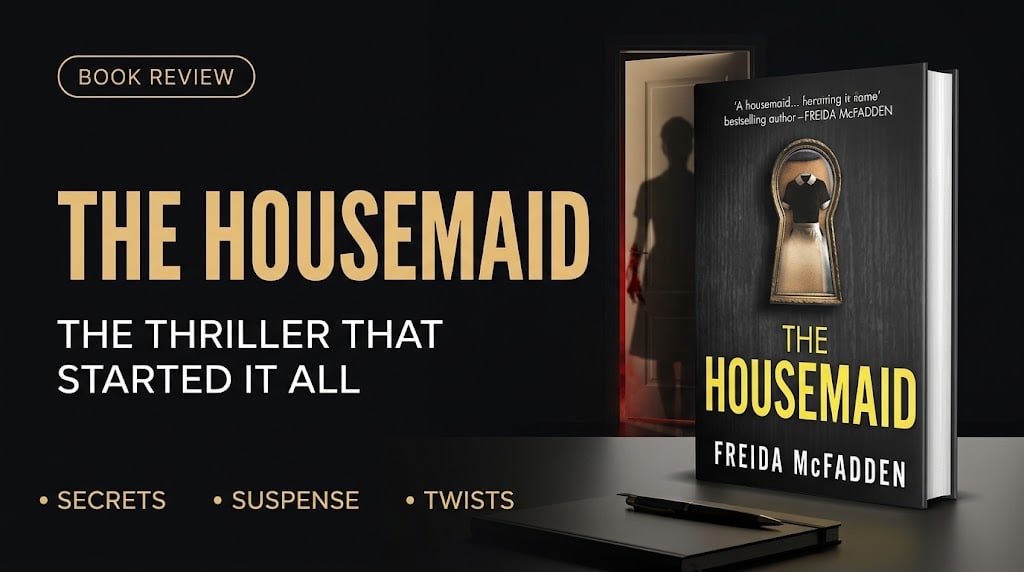
The original Housemaid novel by Freida McFadden — the psychological thriller sensation that became a global bestseller and launched one of fiction's most gripping series.
The original Housemaid novel by Freida McFadden — the psychological thriller sensation that became a global bestseller and launched one of fiction's most gripping series.
This article was written by Sarah Jenkins.
The Housemaid by Freida McFadden is a fast-paced psychological thriller that introduced readers to Millie Calloway and the world of secrets, deception, and domestic suspense that would later become the foundation of a popular series.
At first, the premise seems deceptively simple. Millie is looking for a fresh start and accepts a job working as a housemaid for a wealthy family. The position appears to offer exactly what she needs: employment, accommodation, and the opportunity to rebuild her life.
But almost immediately, something feels wrong.
The house is beautiful, the family appears privileged, and the job seems like an opportunity Millie cannot afford to lose. Yet the behavior of the people inside the house gradually raises uncomfortable questions.
Why is Nina Winchester so unpredictable?
Why does the family seem to have so many secrets?
Why is Millie willing to tolerate circumstances that would make most people walk away?
And perhaps most importantly, what exactly is Millie hiding herself?
These questions form the foundation of a thriller that relies heavily on suspense, changing perceptions, and carefully timed revelations.
Carefully selected books for all tastes at the best prices.
Freida McFadden is an American author best known for psychological thrillers characterized by short chapters, accessible prose, complicated characters, and unexpected twists.
Her novels often place ordinary people in extraordinary psychological situations. Rather than relying primarily on elaborate detective investigations, McFadden frequently creates suspense through relationships, secrets, social differences, and characters who may not be telling the whole truth.
The Housemaid became particularly important because it introduced the formula that would become closely associated with McFadden's work: an apparently ordinary situation, a protagonist with secrets, an environment where something feels wrong, and revelations that repeatedly change the reader's understanding of the story.
The story follows Millie Calloway, a woman who desperately needs a job.
Her circumstances make her vulnerable.
When she is offered employment as a live-in housemaid for the wealthy Winchester family, the opportunity seems almost too good to refuse.
The Winchester household appears to represent everything Millie currently lacks: money, stability, comfort, and security.
But there is an important difference between what a house looks like from the outside and what happens behind closed doors.
Millie soon realizes that her new employers are not as straightforward as they initially appear.
The more time she spends in the house, the more questions emerge.
Millie is one of the main reasons the novel works so effectively.
She is not introduced as a conventional heroine with a completely open past.
Instead, there are things about her life that readers do not immediately understand.
Her circumstances make her sympathetic, but they also create uncertainty.
Why does she need this job so badly?
What has happened in her past?
Why does she make certain decisions?
And can the reader completely trust her perspective?
These questions make Millie a particularly effective protagonist for a psychological thriller.
Millie's need for employment is more than a minor detail.
It influences almost every decision she makes.
When someone desperately needs money, stability, or a place to live, they may tolerate circumstances they would otherwise reject.
This creates an important psychological dynamic.
The reader understands why Millie stays even when things become uncomfortable.
Her situation creates vulnerability.
And vulnerability creates suspense.
The Winchester family represents wealth, privilege, and social status.
From the outside, they appear to have the kind of life many people would envy.
But the novel quickly challenges that impression.
The Winchester household is not the peaceful environment it initially appears to be.
The relationships inside the home are complicated.
Different characters want different things.
And information is constantly being withheld.
The contrast between appearance and reality becomes one of the novel's central themes.
Nina is one of the most intriguing characters in the story.
Her behavior toward Millie can seem unpredictable, demanding, and difficult to understand.
At times, she appears controlling.
At other moments, her actions create questions that make readers reconsider their initial impressions.
This ambiguity is deliberate.
The novel encourages readers to form an opinion about Nina before giving them enough information to fully understand her.
That technique is essential to the story's suspense.
Andrew Winchester presents another side of the household.
He appears more stable and approachable than Nina, at least from Millie's initial perspective.
His personality contributes to the uncertainty surrounding the family.
As readers learn more about the Winchester household, they are encouraged to question whether appearances can be trusted.
Who is telling the truth?
Who is manipulating whom?
And how much does each person know?
The house itself plays an important role in creating the novel's atmosphere.
It is large, wealthy, and visually impressive.
But it also becomes increasingly claustrophobic.
A home should normally represent safety.
Here, it becomes a place of uncertainty.
Every room can contain secrets.
Every locked door can create suspicion.
Every unusual behavior can become a potential clue.
This transformation of a familiar domestic environment into a threatening space is one of the defining characteristics of the domestic thriller genre.
One of the most effective suspense mechanisms in the novel is the presence of spaces that Millie cannot freely access.
A locked room immediately creates curiosity.
Why is it locked?
What is inside?
Why does someone want to keep it private?
The reader begins asking these questions alongside Millie.
This is a simple storytelling device, but it is remarkably effective because it turns physical space into part of the mystery.
The Housemaid belongs to the broader tradition of domestic suspense.
Domestic thrillers often focus on danger within seemingly ordinary environments.
Instead of an unfamiliar criminal organization or distant crime scene, the threat may exist inside a family home.
This makes the stories particularly relatable.
The characters live in recognizable environments.
They have jobs, relationships, routines, and neighbors.
But underneath that normality, something is wrong.
One of the strongest themes in the novel is the contrast between how people appear and who they actually are.
A wealthy family can have serious problems.
A seemingly innocent person can have secrets.
A person who appears unstable may have reasons for behaving that way.
A person who seems trustworthy may not deserve that trust.
This constant tension between appearance and reality keeps the reader questioning their own assumptions.
Secrets are the foundation of the novel's suspense.
Every important character appears to have something they would rather keep hidden.
The reader therefore becomes part investigator and part psychologist.
Instead of simply asking what happened, we ask why someone would lie.
Motivation becomes just as important as action.
A secret becomes interesting when we understand what someone might lose if the truth were revealed.
The novel becomes even more compelling because Millie is not simply investigating other people's secrets.
She has her own.
Her past influences the way she sees the world.
It also affects the choices she makes throughout the story.
This creates a fascinating ambiguity.
The reader may sympathize with Millie while simultaneously wondering whether she is telling the complete truth.
That tension is central to her character.
The relationship between Millie and the Winchester family also creates an opportunity to explore social class.
Millie enters their home as an employee.
The Winchesters have wealth and status.
This difference affects the power dynamic.
Millie depends on them financially.
They control the conditions of her employment.
They have resources that she does not.
This imbalance creates an environment where trust becomes complicated.
The novel demonstrates that power does not always belong to the person who appears strongest.
A wealthy employer may have financial power.
An employee may possess information.
A person who appears vulnerable may know something important.
Someone who seems dominant may have their own weaknesses.
This shifting balance of power is one of the elements that makes the story so engaging.
Manipulation is another important element of the novel.
Characters influence one another through information, emotional pressure, social status, and carefully chosen behavior.
Manipulation does not always look dramatic.
Sometimes it involves making another person doubt their own judgment.
Sometimes it involves withholding information.
Sometimes it involves presenting yourself differently depending on who is watching.
The novel uses these psychological dynamics to create uncertainty.
One of the central questions of the book is whether observation is enough to understand someone.
Millie sees things.
But seeing something does not necessarily mean understanding it correctly.
A person can observe an argument without knowing what caused it.
A person can hear a conversation without knowing the history behind it.
A person can witness someone's behavior without understanding their motivations.
This is why the story repeatedly challenges first impressions.
Psychological thrillers often use unreliable perspectives because uncertainty is essential to suspense.
When readers cannot be completely certain that a narrator's interpretation is correct, every event becomes more interesting.
Millie's perspective gives us access to her thoughts.
But that does not automatically mean we know everything.
The reader has to interpret her decisions and compare them with what other characters say.
The basic structure of The Housemaid is remarkably effective.
Millie needs a job.
She enters a wealthy household.
Something feels wrong.
She discovers increasingly disturbing information.
Her own past becomes relevant.
The balance of power shifts.
And the reader's understanding of the characters changes.
The story is designed around escalation.
Each new discovery raises the stakes.
Pacing is one of McFadden's strongest storytelling characteristics.
The novel does not spend excessive time on lengthy descriptions.
Instead, chapters tend to move quickly from one event to another.
This creates momentum.
A reader can easily become absorbed because there is almost always another question waiting to be answered.
The novel is particularly effective at creating the feeling of:
"I'll just read one more chapter."
A chapter may end with a new discovery.
The next chapter raises another question.
A character behaves unexpectedly.
A secret appears.
The reader continues.
This cycle creates a highly accessible reading experience, especially for people who enjoy fast-paced thrillers.
The twists in The Housemaid are not simply surprises added for shock value.
Their purpose is to change the reader's understanding of what came before.
A character who appeared suspicious may suddenly seem different.
A previous event may acquire another meaning.
Something that seemed insignificant may become important.
This retrospective effect is one of the defining characteristics of twist-driven fiction.
This is a book where spoilers can significantly reduce the experience.
The story relies heavily on uncertainty and changing perceptions.
Knowing the major revelations in advance can make earlier scenes feel very different.
For that reason, it is best to approach the novel with as little information as possible.
You should know the premise.
You should know the genre.
But you should not know every secret.
The atmosphere combines domestic familiarity with psychological unease.
The house is comfortable but unsettling.
The family is wealthy but dysfunctional.
Millie has a job but remains vulnerable.
Everything seems normal enough to continue.
Yet something feels wrong.
This contrast creates the book's particular tension.
The Housemaid is not a traditional horror novel.
There are no supernatural monsters driving the story.
Its fear comes from people.
More specifically, it comes from uncertainty about what people are capable of doing.
That can make psychological thrillers particularly disturbing.
The environment is recognizable.
The danger feels possible.
The characters are not always easy to categorize.
Someone can behave badly while having understandable motivations.
Someone can appear sympathetic while hiding important information.
Someone can make a terrible decision without being completely defined by that decision.
This moral ambiguity helps keep the reader engaged.
It prevents the story from becoming a simple battle between heroes and villains.
Survival is an important underlying idea.
Millie's circumstances make her aware of what she needs to protect.
She has limited options.
She has to make decisions quickly.
She has to evaluate people.
And she has to determine when staying is more dangerous than leaving.
The novel therefore explores survival not only physically but also emotionally and socially.
Desperation can change how people evaluate risk.
When someone has few alternatives, an opportunity can look more attractive than it would under normal circumstances.
This is important to Millie's character.
The job is not necessarily perfect.
But she needs it.
That need influences what she is willing to tolerate.
The novel uses this situation to create realistic psychological tension.
Trust becomes increasingly important as the story progresses.
Millie has to decide whom she can believe.
The reader has to make the same decision.
That creates an interesting parallel.
As Millie discovers new information, the reader also has to revise their own assumptions.
Trust therefore operates on two levels: inside the story and between the author and the reader.
Several characteristics helped The Housemaid appeal to a broad audience.
The premise is easy to understand.
The chapters move quickly.
The characters are immediately intriguing.
The story contains frequent revelations.
The writing is accessible.
And the book creates strong discussion potential.
Readers can easily finish the novel and immediately want to talk about what they just discovered.
One of the most important aspects of the novel is that it introduces Millie.
Her character becomes the connecting element of the broader Housemaid series.
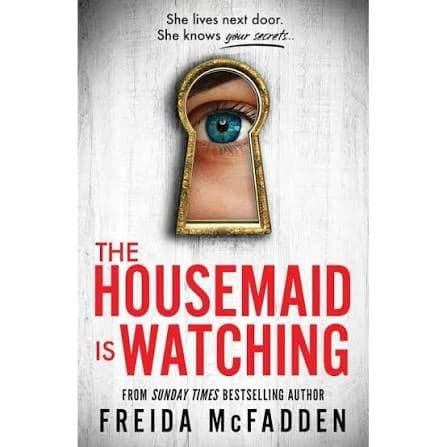
The success of the first book eventually led readers to The Housemaid's Secret and The Housemaid Is Watching.
For readers discovering the series today, starting with the first book offers the best introduction to Millie's background.
The second book continues Millie's story while introducing another dangerous situation.
Although each installment has its own central conflict, the books share themes of secrecy, domestic environments, vulnerability, and unexpected revelations.
Reading the first novel first helps readers understand Millie's development.
The third installment continues the broader Housemaid storyline and gives readers another opportunity to follow Millie through an increasingly complicated situation.
The series maintains its emphasis on psychological suspense and domestic secrets.
For fans who enjoyed the first book's combination of fast pacing and twists, the later installments offer a natural continuation.
The Housemaid is particularly suitable for readers who enjoy fast-paced psychological thrillers.
It is a good choice if you like stories involving:
Domestic secrets.
Unreliable characters.
Wealthy families with hidden problems.
Social power dynamics.
Unexpected twists.
Morally complicated protagonists.
Short chapters and rapid pacing.
Readers who enjoyed books such as Gone Girl or The Girl on the Train may also appreciate its emphasis on unreliable perceptions and psychological suspense, although the writing styles and stories are different.
Readers looking for slow, highly literary fiction may find the straightforward prose too simple.
Similarly, readers who prefer intricate police investigations may want more emphasis on traditional detective work.
The novel is primarily designed around psychological suspense and entertainment.
Understanding that genre expectation makes it easier to appreciate what the book is trying to accomplish.
The novel combines three particularly effective ingredients:
Curiosity.
Uncertainty.
Escalation.
Curiosity makes readers want answers.
Uncertainty prevents them from feeling completely confident.
Escalation ensures that the stakes continue increasing.
Together, these elements create a strong narrative engine.
The biggest strengths of The Housemaid are its pacing, accessibility, central mystery, and ability to repeatedly challenge the reader's assumptions.
The premise immediately creates curiosity.
Millie's complicated background gives the story emotional depth.
The Winchester household provides an effective setting for suspense.
And the shifting power dynamics keep the relationships interesting.
The novel's fast pace can sometimes come at the expense of deeper character development.
Some readers may also find certain plot developments more focused on entertainment and surprise than strict realism.
But these characteristics are partly a consequence of the book's genre.
It is designed to be a page-turner.
Its primary objective is to keep readers engaged and questioning what will happen next.
For fans of psychological thrillers, The Housemaid is an easy recommendation.
It offers a compelling protagonist, a mysterious wealthy family, an unsettling domestic environment, and enough unanswered questions to keep the story moving.
It is also a particularly good starting point for readers who want to discover Freida McFadden's Housemaid series.
The book does not require readers to be experts in psychology or crime fiction.
Its appeal comes from its accessibility.
You can begin with a simple premise and quickly become invested in the characters and their secrets.
The Housemaid by Freida McFadden is the novel that introduced readers to Millie Calloway and established the foundation for one of the author's most recognizable thriller series.
Its central premise is deceptively simple: a woman desperate for a new beginning accepts a job with a wealthy family, only to discover that the beautiful home she has entered hides disturbing secrets.
What makes the story effective is the constant uncertainty.
The reader is never encouraged to settle too comfortably on a single interpretation.
Characters reveal information gradually.
Power shifts.
Trust becomes questionable.
And Millie's own past adds another layer of mystery to the story.
The novel's greatest strength is its ability to maintain momentum. Short chapters, accessible writing, psychological tension, and unexpected developments make it particularly easy to read quickly.
It is not a traditional detective mystery, nor is it a conventional romance. The Housemaid is best understood as a fast-paced domestic psychological thriller designed to keep readers questioning appearances and turning pages.
For readers who enjoy stories about secrets, manipulation, survival, complicated relationships, and unexpected twists, it offers an entertaining introduction to Freida McFadden's style.
And for anyone planning to explore the Housemaid series, this is where it all begins.
The beautiful house is only the surface. Behind its doors are secrets, shifting alliances, and people who may not be who they appear to be. That's what makes The Housemaid such an effective thriller—and why readers who finish it often find themselves immediately wanting to know what happens next.
The Housemaid works particularly well as an introduction to Freida McFadden's style because it combines a relatively accessible premise with secrets that gradually alter the reader's interpretation of events. The novel understands one of the fundamental principles of thriller writing: readers continue not only because they want answers, but because every answer creates another question.
We believe its greatest strength is its readability. The narrative moves quickly and rarely allows the reader to become detached from the central mystery. This makes it particularly appealing to readers who want an entertaining book they can finish quickly.
The novel should nevertheless be approached primarily as a commercial psychological thriller. Readers searching for extremely elaborate prose or highly detailed psychological realism may have different expectations. Its effectiveness comes mainly from pacing, suspense and plot construction.
Be the first to comment!