riwaya.
We use cookies to improve your experience, analyze our traffic, and offer you personalized offers. Learn more in our Privacy Policy.
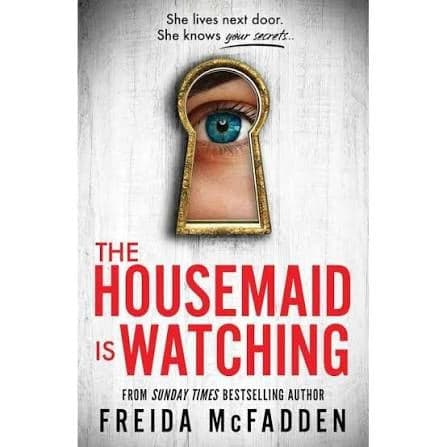
Freida McFadden
Freida McFadden returns with another gripping psychological thriller. "The Housemaid is Watching" keeps readers on the edge of their seats with shocking twists…
Freida McFadden returns with another gripping psychological thriller. "The Housemaid is Watching" keeps readers on the edge of their seats with shocking twists…
This article was written by Sarah Jenkins.
Rich Dad Poor Dad by Robert Kiyosaki is one of the most widely discussed personal-finance books of the modern era. First published in 1997, the book presents a different way of thinking about money, work, wealth, entrepreneurship, and financial education. Rather than functioning as a conventional investment manual, it focuses primarily on the beliefs and habits that influence the way people earn, spend, save, and invest.
The central idea of the book is relatively simple: financial success is not determined only by how much money a person earns. According to Kiyosaki, what matters just as much is what a person does with that money, how they understand financial concepts, and whether they gradually build assets capable of generating income.
The book became particularly influential because it challenges a familiar model of financial life: study hard, obtain a secure job, earn a salary, save money, and work until retirement. Kiyosaki argues that this approach can be incomplete if it does not include financial education and an understanding of how assets, liabilities, taxes, businesses, and investments work.
However, Rich Dad Poor Dad should not be treated as a complete financial plan. Some of its concepts are deliberately simplified, and several of its investment-related ideas require considerably more nuance when applied to real life. The book is therefore most useful as an introduction to financial thinking rather than as a step-by-step investment guide.
This review examines the book's main ideas, strengths, limitations, practical lessons, and relevance for modern readers.
Carefully selected books for all tastes at the best prices.
The full title of the book is Rich Dad Poor Dad: What the Rich Teach Their Kids About Money That the Poor and Middle Class Do Not! It was written by Robert T. Kiyosaki and originally published in 1997.
The book is structured around the contrast between two influential father figures. Kiyosaki describes his biological father as his "poor dad" and the father of his childhood best friend as his "rich dad." The two men are presented as having very different attitudes toward education, employment, money, risk, and wealth.
The "poor dad" represents the conventional approach to professional success. Education, academic achievement, job security, and a stable career are emphasized. The "rich dad," by contrast, represents entrepreneurial thinking, financial education, investing, and building income-producing assets.
The contrast provides the framework for many of the book's lessons. Instead of simply telling readers what to do with their money, Kiyosaki asks them to reconsider the assumptions they may have inherited about work and wealth.
One important point when reading the book is that it is not written like an academic economics textbook. It uses anecdotes, simplified examples, conversations, and memorable distinctions to communicate its ideas. Its objective is largely to change the reader's mindset and encourage further learning.
The most important message of Rich Dad Poor Dad is that financial education matters.
Kiyosaki argues that people can spend years learning professional skills without learning how personal finance actually works. Someone may become an excellent engineer, doctor, teacher, lawyer, programmer, or manager while still having little understanding of cash flow, investment risk, taxation, debt, or asset allocation.
The book therefore separates two concepts that are often treated as identical: earning money and building wealth.
A person can have a high salary and still experience financial difficulties if expenses continuously rise alongside income. Conversely, someone with a more modest income can potentially improve their financial position by controlling expenses, avoiding destructive debt, investing consistently, and acquiring productive assets.
This does not mean that income is irrelevant. Higher income can provide greater capacity to save and invest. Kiyosaki's broader argument is that income alone does not automatically create financial independence.
The reader is encouraged to develop the ability to understand where money comes from, where it goes, and how financial decisions affect future cash flow.
The book's most recognizable feature is the comparison between the two father figures.
The two characters are used to illustrate contrasting philosophies. One places greater emphasis on traditional employment and professional security, while the other emphasizes financial independence and ownership.
This storytelling technique makes abstract financial concepts easier to remember. Instead of beginning with definitions and formulas, Kiyosaki turns financial education into a personal story.
The contrast also introduces an important psychological dimension. Financial decisions are rarely purely mathematical. People often make decisions based on fear, social expectations, family traditions, status, or their perception of security.
For example, many people consider a stable salary to be the ultimate form of financial security. Kiyosaki challenges this assumption by asking whether depending entirely on a single employer can actually provide long-term independence.
At the same time, the comparison should not be interpreted too literally. In real life, employment and entrepreneurship are not mutually exclusive categories. A stable career can provide an excellent foundation for investing, while entrepreneurship can involve substantial risk and financial uncertainty.
The most useful lesson is therefore not that one "dad" is always right and the other is always wrong. The deeper lesson is that people benefit from questioning their assumptions about money.
Financial literacy is arguably the most valuable theme in Rich Dad Poor Dad.
Financial education involves understanding concepts such as income, expenses, savings, debt, assets, liabilities, investment returns, taxes, inflation, and risk.
Without this knowledge, people can make decisions based almost entirely on emotion or advice from others.
For example, someone may purchase an expensive car because they believe the purchase demonstrates financial success. Another person may purchase an investment without understanding its risks because a friend claims it is guaranteed to appreciate.
Financial education creates a different approach. Instead of asking only, "Can I afford this?" a financially informed person may also ask:
How will this purchase affect my future cash flow?
Will it produce income or consume income?
What risks am I taking?
What opportunity am I giving up by spending this money?
How does the investment fit into my overall financial situation?
These questions are more useful than simply memorizing investment terminology.
One of Kiyosaki's most famous lessons is his distinction between assets and liabilities.
In the simplified framework used by the book, an asset is something that puts money into your pocket, while a liability takes money out of your pocket.
This explanation is intentionally straightforward because Kiyosaki wants readers to think about cash flow rather than simply the market value of possessions.
For example, an investment that consistently produces income may contribute positively to cash flow. A consumer purchase that requires ongoing payments, maintenance, insurance, and other expenses may create a financial burden even if the item has significant value.
The concept is memorable because it changes the question from "How much is this worth?" to "What does this do to my cash flow?"
However, readers should understand that the book's definition is a simplified educational model. In accounting, assets and liabilities have more precise meanings. A personal residence, for example, can be recorded as an asset even though it may not generate income for its owner.
The practical lesson remains useful: when evaluating financial decisions, consider both the value of something and its effect on your cash flow.
A recurring argument in Rich Dad Poor Dad is that a higher salary does not automatically solve financial problems.
Imagine two people earning different salaries. The first earns a relatively high income but spends almost everything on housing, transportation, entertainment, subscriptions, consumer purchases, and debt payments. The second earns less but consistently saves, invests, controls lifestyle inflation, and avoids expensive debt.
The first person may appear wealthier because of their salary, but the second may be building a stronger financial foundation.
This is particularly relevant because lifestyle inflation can happen gradually. When income increases, people often increase their spending as well. A larger apartment, more expensive vehicle, frequent travel, premium subscriptions, and increasingly expensive purchases can absorb most of the additional income.
The book encourages readers to break this cycle by directing part of increasing income toward productive assets rather than allowing every increase in income to become an increase in consumption.
Kiyosaki frequently encourages readers to think beyond exchanging time for income.
Traditional employment generally follows a straightforward structure: a person provides labor or expertise and receives a salary or wage.
Investing and business ownership introduce other possibilities. Capital can potentially produce returns, and businesses can potentially generate revenue beyond the direct labor of their owner.
This is one of the book's most attractive concepts because it encourages readers to think about leverage and scalability.
However, "making money work for you" should not be interpreted as effortless passive income. Investments require capital, knowledge, risk management, and sometimes significant ongoing work. Businesses require management, customers, employees, systems, and adaptation.
The phrase is best understood as an invitation to diversify the mechanisms through which wealth can be created.
Cash flow is another important concept running throughout the book.
Cash flow refers to the movement of money into and out of a person's financial life. Income represents money coming in, while expenses represent money going out.
A strong financial position generally requires the person to maintain enough positive cash flow to cover current obligations while also allocating money toward future goals.
This perspective is useful because wealth is not merely about owning valuable things. Someone can own an expensive property, vehicle, or collection of possessions while simultaneously having serious cash-flow problems.
Conversely, someone may own relatively few luxury items but have strong savings, low debt, diversified investments, and stable income streams.
The book encourages readers to examine financial decisions through the lens of cash flow rather than appearances.
Kiyosaki repeatedly argues that people should work toward acquiring assets that can generate income or appreciate over time.
Examples discussed in the broader philosophy of the book include businesses, real estate, securities, intellectual property, and other income-producing investments.
The objective is not necessarily to become wealthy overnight. Instead, the idea is to gradually create a portfolio capable of contributing to financial independence.
This principle is especially relevant for long-term planning. A person who consistently invests a portion of their income over many years can potentially benefit from compounding and long-term growth.
However, asset acquisition should always be accompanied by risk assessment. Not every investment is productive, and not every asset appreciates.
A financially responsible approach considers diversification, liquidity, fees, taxation, market conditions, time horizon, and the possibility of loss.
The concept of the "rat race" is one of the book's most recognizable themes.
Kiyosaki describes a cycle in which people work for income, increase their spending as their income rises, take on additional financial obligations, and then need to continue working to maintain their lifestyle.
The cycle can become particularly strong when people associate higher income with higher consumption.
A promotion leads to a bigger house. A bigger house leads to higher expenses. A higher salary makes a more expensive car seem affordable. The car creates additional monthly obligations. Eventually, the person becomes increasingly dependent on maintaining their employment income.
The book suggests that financial independence requires breaking this relationship between earning more and automatically spending more.
This does not mean that people should never enjoy their money. Instead, the argument is that consumption should not prevent long-term financial progress.
Entrepreneurship plays an important role in Kiyosaki's philosophy.
The book encourages readers to learn how businesses operate and to understand how value is created for customers.
Entrepreneurship can provide opportunities for greater income and ownership, but it also introduces considerable risk.
Starting a business requires more than enthusiasm. It can involve market research, product development, customer acquisition, accounting, legal obligations, operations, technology, marketing, and financial management.
One of the strengths of Kiyosaki's approach is that it encourages readers to develop a business-oriented perspective even if they remain employees.
Understanding how a company generates revenue, controls costs, creates customer value, and allocates capital can improve financial decision-making in almost any career.
Kiyosaki uses the concept of financial intelligence to describe the ability to understand and interpret financial information.
Financial intelligence is not simply knowing how to calculate a percentage. It involves understanding relationships between income, expenses, assets, liabilities, taxes, debt, investment returns, and risk.
For example, an individual might understand that a particular investment produced a 10% return last year. Financial intelligence requires additional questions.
How risky was the investment?
Was the return before or after fees and taxes?
Could the return be repeated?
How does it compare with alternatives?
How much liquidity does the investment provide?
What happens if the investment loses value?
These questions transform financial knowledge from a collection of numbers into a decision-making skill.
One of the more interesting lessons in Rich Dad Poor Dad is the suggestion that people should sometimes choose opportunities based on what they can learn rather than only on immediate salary.
A job can provide exposure to sales, management, negotiation, technology, accounting, marketing, leadership, or operations.
These skills can later become valuable in entrepreneurship or investing.
For example, someone who learns sales may become better at communicating value and negotiating. Someone who works in accounting may gain a stronger understanding of financial statements. Someone working in technology may develop skills that can eventually support a scalable business.
The idea is particularly relevant to younger professionals because early career decisions can influence the skills they accumulate over decades.
Nevertheless, compensation still matters. Learning opportunities should not become an excuse for accepting unfair or unsustainable employment conditions.
The best career decisions often consider both immediate financial needs and long-term skill development.
Fear is another recurring subject in the book.
People often avoid financial opportunities because they are afraid of losing money. This fear is understandable because financial losses can have serious consequences.
Kiyosaki argues that the solution is not to eliminate risk but to learn how to understand and manage it.
This distinction is important.
Taking a risk without understanding it is speculation. Taking a calculated risk after studying the potential outcomes is a different behavior.
A responsible investor considers how much money could be lost, how likely different outcomes are, how long the investment may need to be held, and whether the potential return justifies the risk.
The book's encouragement to become more comfortable with financial risk is useful, but it should be balanced with modern principles of diversification and risk management.
One reason Rich Dad Poor Dad became so influential is that it approaches personal finance as a psychological subject.
People do not always make financial decisions rationally.
Fear can cause someone to sell an investment at the worst possible moment. Greed can cause someone to take excessive risk. Social pressure can encourage unnecessary consumption. A desire for status can lead to excessive debt.
Financial independence therefore involves changing behavior as much as learning financial concepts.
A person may know that saving and investing are important but still struggle to implement those principles consistently.
Creating automatic savings, establishing spending limits, maintaining an emergency fund, and developing long-term investment habits can help convert financial knowledge into actual behavior.
One of the most controversial aspects of Rich Dad Poor Dad is its criticism of relying entirely on employment.
The book encourages readers to avoid seeing a job as the only possible path to financial security.
However, this idea should not be misunderstood as an argument that employment is inherently bad.
Employment provides many benefits. It can provide stable income, professional development, social protection, benefits, and opportunities to acquire specialized skills.
The more balanced interpretation is that a person should avoid confusing employment with complete financial independence.
An employee can use salary income to build savings, investments, businesses, and other sources of financial resilience.
In that sense, a job can be a tool for building wealth rather than an obstacle to it.
Real estate receives significant attention in Kiyosaki's financial philosophy.
Property can potentially generate rental income, appreciate over time, and provide leverage through financing.
But real estate also involves substantial risks and costs.
These can include mortgage interest, maintenance, insurance, taxes, vacancies, repairs, legal costs, property management, and changes in local market conditions.
A property that appears profitable on paper may become much less attractive after all expenses are included.
For this reason, readers should not interpret the book as saying that real estate is always a superior investment.
A sensible analysis should calculate the property's actual cash flow, financing costs, expected vacancy, maintenance expenses, taxes, and realistic return assumptions.
Taxes are another important part of the book's discussion of financial strategy.
Kiyosaki emphasizes that business owners and investors may have access to different legal tax structures and deductions than employees.
The broader lesson is that financial decisions should take taxation into account.
However, tax rules are highly dependent on country, income level, legal structure, and individual circumstances. Tax strategies described in an American context should not automatically be applied elsewhere.
Readers outside the United States should therefore treat the book's tax examples as illustrations rather than universal rules.
Anyone making significant financial decisions should consult current local tax regulations and, when necessary, a qualified professional.
The book's popularity can be explained by several factors.
First, it makes personal finance accessible. Many financial concepts are presented through stories rather than technical terminology.
Second, it challenges conventional assumptions. Readers are encouraged to question ideas they may have accepted without examination.
Third, the book emphasizes action and learning. Instead of simply telling readers to save money, it encourages them to develop financial knowledge.
Fourth, the asset-versus-liability framework is memorable. Even though the accounting terminology is simplified, the concept can encourage people to think more carefully about how purchases affect their finances.
Finally, the book appeals to people who want greater independence. The idea of gradually reducing dependence on a single source of employment income is attractive to many readers.
One major strength is its ability to change the way readers think about money.
A person who previously viewed money simply as something earned through employment may begin thinking about capital, cash flow, ownership, and long-term wealth creation.
Another strength is its emphasis on financial education.
The book encourages readers to learn instead of blindly following financial advice.
Its storytelling format is also effective. The contrast between the two father figures creates a simple framework through which complex ideas can be remembered.
The book also encourages readers to think long term. Financial independence is presented as a process rather than something that happens through a single financial decision.
Finally, its emphasis on personal responsibility can be motivating. Readers are encouraged to improve their financial knowledge and take an active role in their financial future.
Despite its popularity, Rich Dad Poor Dad has significant limitations.
The first is that some concepts are overly simplified. Personal finance is more complicated than the book's binary distinction between assets and liabilities suggests.
Second, the book can sometimes make entrepreneurship and investing appear more straightforward than they actually are.
Building a successful business can take years, and many businesses fail. Investing also involves the possibility of substantial losses.
Third, some of the book's examples are heavily influenced by the American economic and tax environment. Readers in other countries need to adapt the lessons to their own circumstances.
Another limitation is that the book focuses more on mindset than on detailed implementation. A reader finishing the book may feel motivated but still need additional resources to construct a diversified investment portfolio or develop a comprehensive financial plan.
Finally, the contrast between the two fathers can sometimes appear too simplistic. Real-world financial success is influenced by many factors, including education, income, family circumstances, economic conditions, access to capital, health, geography, and luck.
Despite being published decades ago, many of the book's fundamental questions remain relevant.
Modern workers face rising living costs, changing employment patterns, technological disruption, inflation, consumer debt, and increasing access to financial products.
At the same time, people now have access to more financial information than previous generations.
The fundamental challenge remains similar: having access to information does not automatically mean having financial knowledge.
The book's emphasis on understanding money, controlling lifestyle inflation, developing useful skills, and building long-term assets remains valuable.
What has changed is the financial environment in which those principles must be applied.
Modern readers should supplement Kiyosaki's ideas with contemporary knowledge about diversified investing, index funds, retirement planning, emergency savings, insurance, taxation, inflation, and behavioral finance.
The book can be particularly useful for young adults who are beginning their professional lives.
Early financial decisions can have long-term consequences because of the power of compounding.
A young person who develops the habit of saving and investing a portion of income may have decades for those investments to grow.
The book can also encourage young readers to avoid defining success exclusively through salary.
Skills, professional networks, ownership, financial literacy, and disciplined financial habits can all contribute to long-term financial resilience.
However, young readers should be careful not to interpret the book as encouragement to abandon education or stable employment prematurely.
Building a solid foundation is usually more important than attempting to become wealthy quickly.
Employees can also benefit significantly from the book's ideas.
The book does not have to be interpreted as a rejection of employment.
Instead, an employee can use earned income as the foundation for building financial independence.
A practical approach might involve maintaining an emergency reserve, eliminating expensive consumer debt, increasing professional skills, contributing regularly to appropriate investments, and gradually developing additional income sources.
In this context, employment and financial independence can work together.
The salary provides the cash flow needed to build assets, while financial education helps the employee make better decisions about that income.
Entrepreneurs may find the book particularly motivating because it emphasizes ownership and business creation.
However, aspiring entrepreneurs should combine Kiyosaki's mindset with practical business knowledge.
A successful business requires a real customer problem, a viable product or service, sustainable economics, effective marketing, operational discipline, and financial control.
Entrepreneurship should not be viewed simply as a shortcut to wealth.
The book is most useful here as a source of questions: What value am I creating? How does the business generate revenue? Can the model scale? What risks exist? How can systems reduce dependence on the founder?
These questions are more valuable than simply pursuing the label of "entrepreneur."
The most effective way to use Rich Dad Poor Dad is to convert its ideas into practical financial habits.
Start by calculating your monthly income and expenses. Knowing where your money goes is the foundation of financial control.
Next, identify expensive debts and understand their interest rates. High-interest consumer debt can significantly slow wealth accumulation.
Then establish an emergency reserve appropriate to your circumstances. Financial security requires liquidity because unexpected expenses can otherwise force people to borrow or sell investments at inconvenient times.
After that, learn the basics of investing before committing substantial capital. Understand diversification, risk, fees, taxes, time horizon, and the difference between investing and speculation.
Finally, focus on increasing your earning capacity. Developing valuable skills can be one of the most powerful investments a person can make.
A practical framework inspired by Rich Dad Poor Dad can be summarized in several stages.
First, increase financial awareness. Track income, expenses, debts, savings, and investments.
Second, protect your financial foundation. Maintain appropriate emergency savings and insurance while avoiding excessive high-interest debt.
Third, increase your income-producing capacity. Develop professional skills, negotiate compensation when appropriate, and explore legitimate additional income opportunities.
Fourth, invest consistently according to your goals and risk tolerance.
Fifth, avoid lifestyle inflation. When income increases, direct at least part of the increase toward savings and investments rather than automatically increasing consumption.
Sixth, continue learning. Financial markets, taxation, technology, and economic conditions change over time.
This framework captures much of the useful philosophy of the book while avoiding the idea that there is one universal path to wealth.
One common misunderstanding is that the book says everyone should quit their job.
That is not a necessary conclusion. Employment can be an important component of a successful financial strategy.
Another misunderstanding is that every property is an asset.
A property can have financial value without producing positive cash flow. The complete financial picture depends on income, expenses, financing, taxes, maintenance, and appreciation.
Another mistake is believing that entrepreneurship automatically creates financial freedom.
Businesses can generate significant wealth, but they can also create financial losses and personal stress.
A final misunderstanding is that financial independence can be achieved quickly.
In most cases, sustainable wealth creation is a long-term process involving consistent decisions rather than one extraordinary investment.
Rich Dad Poor Dad is best viewed as a starting point.
After reading it, readers can benefit from studying more technical resources on investing, behavioral finance, economics, taxation, business management, and portfolio construction.
The goal should be to move from financial motivation toward financial competence.
A person who reads the book and becomes curious about investing has taken the first step. The next step is to learn how different investment products work and understand their risks.
Similarly, someone inspired by entrepreneurship should study customer research, accounting, marketing, operations, and business strategy.
The most valuable outcome of the book is therefore not simply adopting Kiyosaki's opinions. It is developing the habit of asking better financial questions.
The book is particularly suitable for readers who are new to personal finance and want an accessible introduction to financial thinking.
It can also be useful for young professionals who have never seriously considered the difference between income and wealth.
Entrepreneurs may appreciate its emphasis on ownership, business thinking, and financial education.
Readers who already have advanced knowledge of investing may find the book too basic and may benefit more from specialized financial literature.
It is also important for readers to recognize that the book is primarily about mindset and financial philosophy rather than detailed portfolio management.
Readers looking for a precise investment strategy may be disappointed.
The book does not provide a comprehensive portfolio allocation model, detailed risk-management system, or universal investment formula.
People looking for country-specific tax advice should also look elsewhere because tax rules vary considerably between jurisdictions.
Likewise, readers expecting a rigorous academic analysis of wealth inequality or economic policy may find the book too anecdotal and simplified.
Its primary value lies in changing perspectives and encouraging financial education.
Yes, Rich Dad Poor Dad is worth reading, particularly for people who are beginning their journey into personal finance.
Its greatest strength is not that it provides a perfect financial strategy. It does not.
Its greatest strength is that it encourages readers to think differently about money.
The book asks readers to distinguish income from wealth, consumption from investment, employment from financial independence, and financial information from financial intelligence.
Some of its ideas are simplified, controversial, or overly optimistic when taken literally. Readers should therefore avoid treating the book as a universal blueprint for becoming wealthy.
Instead, it should be considered an introductory framework.
The most valuable lesson is perhaps the simplest one: financial education is a skill that can be developed.
A person does not need to become an expert overnight. Learning how cash flow works, understanding debt, building savings, investing responsibly, controlling lifestyle inflation, and developing valuable skills can gradually improve financial decision-making.
As an introduction to personal-finance thinking, the book deserves a strong rating.
Financial mindset: 9/10
The book is highly effective at encouraging readers to reconsider their assumptions about money.
Accessibility: 9/10
Its storytelling approach makes financial concepts approachable for beginners.
Practical investment guidance: 6/10
The book provides useful principles but does not replace a detailed investment education.
Depth: 6.5/10
Its ideas are memorable but sometimes simplified and repetitive.
Long-term relevance: 8/10
The emphasis on financial education, cash flow, skills, and ownership remains relevant, although the financial environment has changed considerably since publication.
Overall rating: 8/10
Rich Dad Poor Dad is best understood as a financial mindset book rather than a complete investment manual. Its real value comes from encouraging readers to become more financially aware, question conventional assumptions, and take responsibility for learning how money works.
Rich Dad Poor Dad remains an influential personal-finance book because it addresses a question that many people never formally learn to ask: How can I make my money decisions serve my long-term financial goals?
Robert Kiyosaki's answer focuses on financial education, assets, cash flow, entrepreneurship, investment, and the development of financial intelligence.
Not every recommendation in the book should be followed literally. Some of its distinctions are simplified, and readers should supplement its ideas with reliable and current financial information.
Nevertheless, the book can serve as a useful starting point.
Its most important contribution is not a specific investment product, business strategy, or promise of wealth. It is the idea that financial knowledge deserves deliberate attention.
For a beginner, that change in perspective can be significant. Once someone starts examining income, expenses, debt, assets, risk, and long-term goals more carefully, money becomes less mysterious and financial decisions become more deliberate.
Ultimately, Rich Dad Poor Dad is not a guarantee of financial success. It is an invitation to learn.
And for anyone who wants to build a stronger relationship with money, learning is a valuable place to begin.
I've been following Millie's journey since the first book, and what strikes me most in this third installment is how McFadden plays with the concept of the home. Normally, our home is our ultimate sanctuary, but here, the unsettling feeling of being watched completely shatters that security. It really makes you participate in the mystery and question every little detail, just like Millie does.