riwaya.

riwaya.🇲🇦
We use cookies to improve your experience, analyze our traffic, and offer you personalized offers. Learn more in our Privacy Policy.
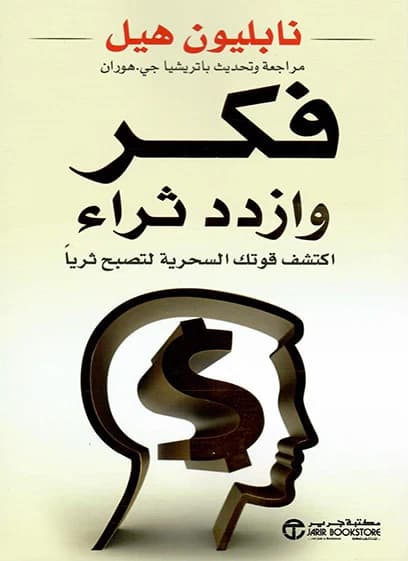
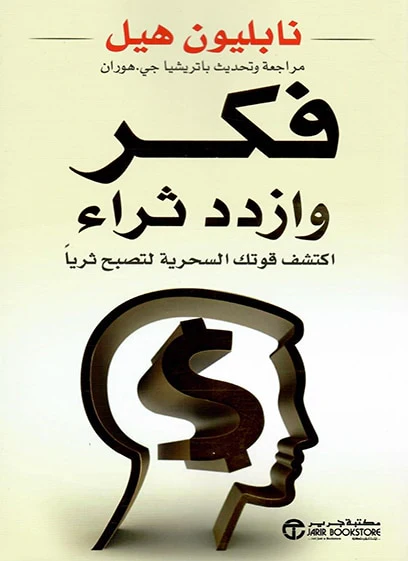
نابليون هيل
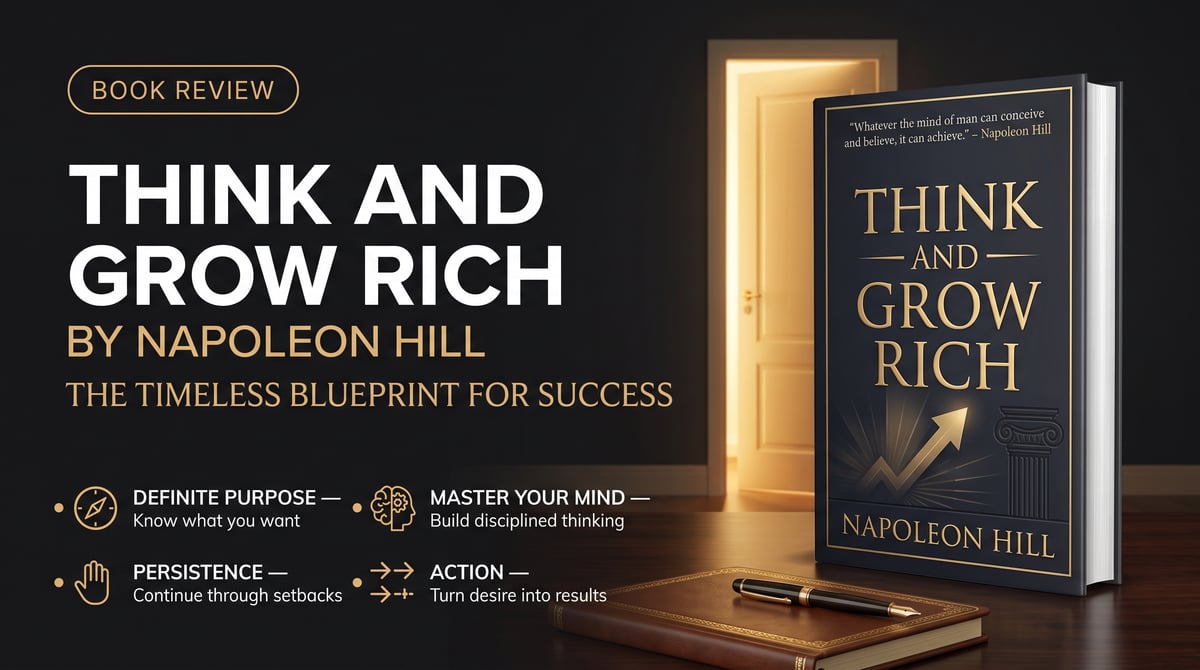
Napoleon Hill's masterpiece, originally published in 1937, remains one of the best-selling books in history. A profound study of the mindset and habits of the…
Napoleon Hill's masterpiece, originally published in 1937, remains one of the best-selling books in history. A profound study of the mindset and habits of the…
This article was written by Sarah Jenkins.
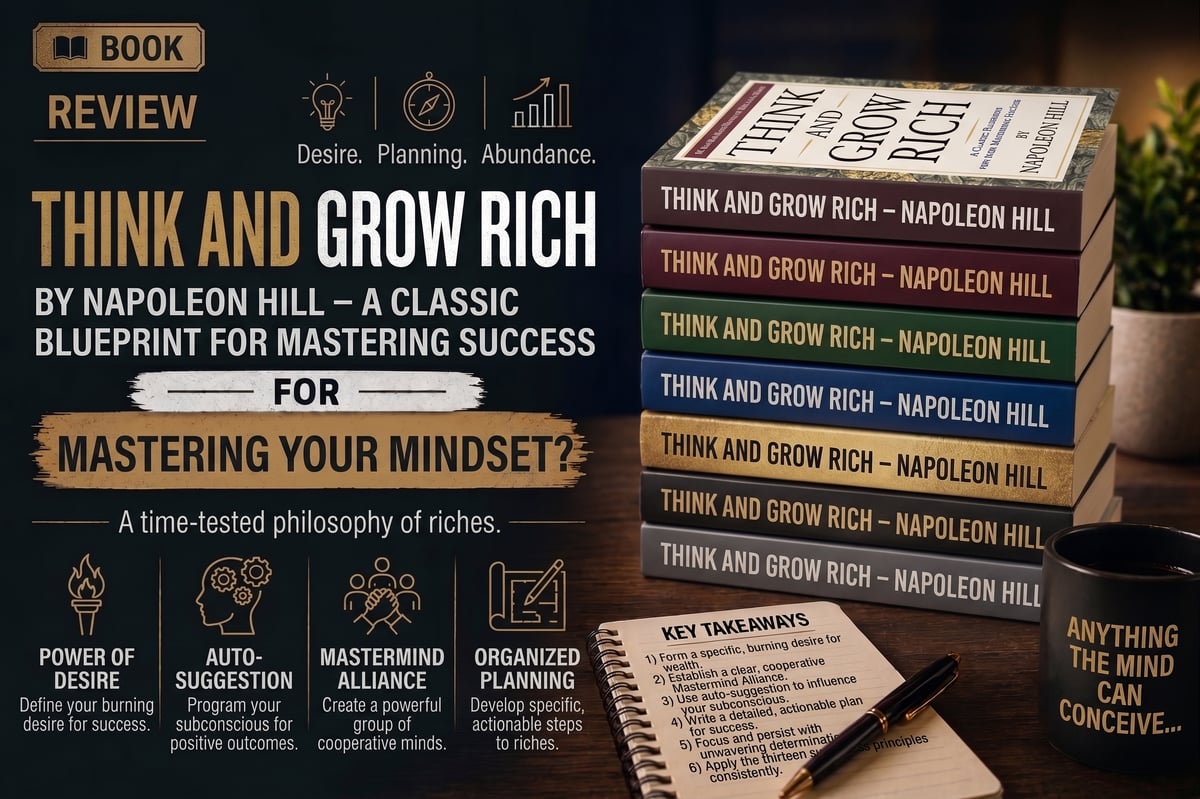
Think and Grow Rich by Napoleon Hill is one of the most influential books ever written about ambition, achievement, personal development, and financial success. First published in 1937, the book has remained in circulation for generations and continues to attract readers who want to understand the psychology behind successful action.
At first glance, the title can make the book sound like a simple promise of becoming wealthy through positive thinking. Its actual message is broader and more nuanced. Hill argues that achievement begins with a clearly defined objective, but that desire alone is insufficient. It must be transformed into organized action, persistence, learning, decision-making, and collaboration.
The book presents a collection of principles that Hill believed could help individuals turn ambitions into concrete results. Some of these ideas are closely connected to modern concepts such as goal setting, visualization, self-efficacy, networking, deliberate planning, and persistence.
Other parts of the book reflect the language and assumptions of the early twentieth century and should be read within their historical context.
For modern readers, the most valuable approach is not to treat every statement as a scientific fact or guaranteed formula for wealth. Instead, Think and Grow Rich can be read as a classic motivational philosophy about taking responsibility for one's direction, developing a strong purpose, and consistently acting toward meaningful goals.
Carefully selected books for all tastes at the best prices.
Nearly a century after its publication, the book remains relevant because many of the challenges involved in achieving difficult goals have not fundamentally changed.
Technology has transformed how people work, communicate, and build businesses. Artificial intelligence has changed the way information can be accessed and processed. Social media has created entirely new forms of entrepreneurship and personal branding.
Yet people still struggle with procrastination, unclear goals, fear of failure, inconsistent effort, lack of confidence, poor planning, and difficulty maintaining focus.
These are precisely the types of obstacles Hill repeatedly addresses.
The modern world may provide more tools than ever before, but tools do not automatically produce results. A person can have access to thousands of courses, productivity applications, videos, books, and online communities and still fail to make progress because they lack a clear objective or consistent execution.
This is one reason the book continues to attract readers.
Its central question remains relevant: What separates people who merely wish for something from people who organize their lives around achieving it?
Napoleon Hill was an American writer associated with the personal success literature of the early twentieth century.
Hill became particularly known for his philosophy of achievement and his attempts to identify common principles among successful individuals.
According to Hill's own account, his work was influenced by conversations and research involving prominent figures of the industrial era. Andrew Carnegie is particularly important in the story Hill tells about the development of his philosophy.
The historical details surrounding Hill's claims have been debated by later researchers, so readers should distinguish between Hill's narrative about his research and independently verified historical evidence.
Regardless of those debates, the influence of Hill's writing is undeniable. Think and Grow Rich became one of the foundational books in the modern self-help and success literature genre.
The central premise is that achievement begins with a clearly defined desire.
Hill does not simply say that thinking about money will magically produce money.
His broader argument is that a person's dominant goals influence their decisions, attention, behavior, and persistence.
If someone has no clear objective, their effort is likely to become scattered.
If someone has a specific objective, they can begin organizing resources around it.
For example, "I want to become successful" is too vague to guide daily behavior.
"I want to develop a profitable online business over the next three years by mastering a specific skill, building a product, and acquiring customers" creates a much clearer direction.
The difference is not magical thinking.
It is specificity.
Hill organizes his philosophy around thirteen major principles.
These include Desire, Faith, Autosuggestion, Specialized Knowledge, Imagination, Organized Planning, Decision, Persistence, the Master Mind, Sex Transmutation, the Subconscious Mind, the Brain, and the Sixth Sense.
Some of these concepts can be translated into modern psychological or professional language relatively easily.
For example, organized planning resembles goal-setting and project planning. Specialized knowledge connects with skill development. Persistence relates to sustained effort. Decision-making addresses procrastination.
Other concepts, particularly autosuggestion, sex transmutation, and the sixth sense, reflect Hill's philosophical and spiritual framework and should not automatically be interpreted as scientifically established mechanisms.
Understanding this distinction allows modern readers to extract useful ideas without confusing motivational philosophy with scientific evidence.
Hill presents desire as the starting point of achievement.
A weak wish is different from a committed objective.
Almost everyone wants something. People want more money, better health, professional recognition, meaningful relationships, freedom, or personal achievement.
But wanting something does not automatically change behavior.
Strong desire becomes useful when it is translated into a concrete objective.
Instead of simply saying, "I want to become wealthy," define what financial outcome you are pursuing, why it matters, what you are willing to contribute, and what timeframe you are working within.
The important lesson is that clarity creates direction.
A useful modern interpretation of Hill's idea is to transform vague aspirations into measurable objectives.
A goal should ideally answer several questions.
What exactly do you want?
Why do you want it?
What skills or resources will you need?
What are you willing to sacrifice?
What actions must happen repeatedly?
When will you evaluate your progress?
This process does not guarantee success.
It does, however, make action easier to organize.
A clear objective gives you something against which you can evaluate decisions.
Hill's concept of faith concerns belief in the possibility of achieving the desired objective.
From a modern perspective, this can be connected to confidence and self-efficacy.
People who believe improvement is possible are often more willing to attempt difficult tasks and persist through setbacks.
However, confidence should not become denial.
Believing that a goal is possible does not mean ignoring evidence, risk, or constraints.
A healthy form of confidence combines optimism with realism.
You can believe that a difficult goal is achievable while still recognizing that your strategy may need to change.
This distinction is particularly important when reading Think and Grow Rich today.
Confidence can encourage action.
Blind belief can prevent learning.
If someone assumes that success is guaranteed simply because they believe strongly enough, they may ignore warning signs.
A more useful approach is to believe in your capacity to learn and adapt rather than assuming that every plan will work exactly as imagined.
That mindset creates resilience without abandoning reality.
Autosuggestion is Hill's concept of repeatedly influencing one's subconscious through thoughts, statements, and mental repetition.
The idea has historical roots in earlier theories of suggestion and self-conditioning.
Modern readers may interpret this principle as a structured way of reinforcing goals and attention rather than as a magical mechanism.
For example, repeatedly reminding yourself of an important objective can keep it mentally accessible.
That may influence what information you notice, what opportunities you consider, and which actions you prioritize.
However, simply repeating a statement does not guarantee that external reality will change.
The value lies in connecting mental focus with practical behavior.
Hill distinguishes between general knowledge and specialized knowledge.
In modern professional life, this distinction remains extremely important.
The internet has made general information abundant.
You can search almost any basic question in seconds.
As information becomes easier to access, specialized competence can become more valuable.
A person who knows how to solve a specific difficult problem can create significantly more value than someone who simply possesses large amounts of general information.
Knowledge becomes useful when it produces outcomes.
Learning programming without building anything may provide limited practical value.
Studying marketing without testing campaigns leaves your understanding theoretical.
Reading about entrepreneurship without speaking to customers can create an incomplete picture.
Hill's principle therefore aligns with a modern lesson: learn, apply, measure, improve.
The objective is not to know everything.
It is to develop useful expertise.
Hill describes imagination as the workshop of the mind.
He distinguishes between forms of imagination that rearrange existing ideas and more creative forms that generate new possibilities.
This principle is especially relevant to entrepreneurship and innovation.
Many successful products are not created from completely new concepts. They combine existing technologies or ideas in new ways.
Creativity can therefore involve asking different questions.
Can an existing process be simplified?
Can two services be combined?
Can a problem be solved for a different audience?
Can an established idea be redesigned?
Imagination becomes valuable when it leads to experimentation.
Desire without planning remains a wish.
Hill therefore emphasizes organized planning as the bridge between ambition and execution.
A useful plan identifies the objective, resources, skills, sequence of actions, deadlines, and possible obstacles.
Modern project management adds another important concept: iteration.
A plan should not necessarily remain fixed.
If evidence shows that an assumption was wrong, the plan should change.
Good planning therefore combines structure with flexibility.
One of the dangers of planning is becoming so comfortable with preparation that action is delayed.
Research can become procrastination.
More planning is not always better.
At some point, you need to test the idea against reality.
Build the prototype.
Talk to customers.
Submit the application.
Publish the first article.
Make the first sales call.
The market and real-world feedback can reveal information that planning alone cannot provide.
Hill places significant emphasis on decision-making.
Indecision can consume enormous amounts of time.
People may spend weeks thinking about whether to start a project, change careers, learn a skill, launch a business, or pursue an opportunity.
The problem is not careful thinking.
The problem is endless hesitation.
Effective decision-making involves collecting enough relevant information, evaluating the major risks, and then committing to a course of action.
The decision can later be revised if new evidence appears.
Modern life provides access to an enormous amount of information.
This can create the illusion that the perfect decision is always one more search away.
In reality, many important decisions must be made under uncertainty.
You may never know exactly what will happen.
A useful approach is to distinguish between reversible and difficult-to-reverse decisions.
For reversible decisions, experimentation can be better than endless analysis.
For major irreversible decisions, deeper evaluation may be justified.
Persistence is one of the most practical principles in the book.
Many worthwhile goals require repeated effort over long periods.
Learning a difficult skill can take years.
Building a business can involve repeated failures.
Writing a book requires sustained effort.
Changing a habit requires repetition.
The difficulty is that results are often delayed.
People may work for months without seeing the outcome they expected.
Persistence allows effort to continue during this period of uncertainty.
There is an important distinction between persistence and refusing to change.
Persistence means continuing toward a meaningful objective.
Stubbornness means continuing the same strategy despite evidence that it does not work.
Successful persistence often requires adaptation.
If one approach fails repeatedly, change the method while keeping the larger objective.
The ability to distinguish between a failed strategy and a failed goal is extremely valuable.
The "Master Mind" concept describes the power of coordinated knowledge, experience, and support from other people.
In modern language, this can be understood as building a strong network or advisory group.
No individual has complete knowledge.
A business founder may understand the product but lack financial expertise.
A developer may understand technology but lack marketing experience.
A student may understand theory but need practical mentorship.
Collaboration allows people to combine complementary strengths.
Your environment can influence your thinking.
People who constantly challenge you to improve can raise your standards.
People who provide honest feedback can help identify blind spots.
People who share useful knowledge can accelerate learning.
A strong network is not simply a collection of contacts.
It is a group of relationships based on mutual value, trust, and learning.
Sex transmutation is one of the more unusual concepts in Think and Grow Rich.
Hill presents sexual energy as something that can be redirected toward creativity, ambition, and achievement.
Modern readers should approach this idea within the historical and philosophical context of the book.
There is no need to interpret it as a scientifically established law that guarantees productivity.
A more practical interpretation is that strong human drives can influence motivation and behavior, and people can learn to direct their energy toward constructive goals.
The broader lesson is about self-control and channeling attention rather than suppressing normal human emotions.
Hill argues that repeated thoughts, emotions, and beliefs influence the subconscious.
The modern understanding of psychology is much more complex than Hill's framework, and readers should avoid treating the subconscious as a simple mechanism that automatically produces external outcomes.
Nevertheless, the general idea that repeated attention can influence habits, expectations, and behavior remains interesting.
What you repeatedly focus on can affect what you notice and how you respond.
If someone constantly expects opportunities, they may become more attentive to them.
If someone constantly expects rejection, they may interpret ambiguous situations negatively.
The useful lesson is to examine habitual thinking patterns while remaining grounded in evidence.
Hill describes the brain as a broadcasting and receiving station for thought.
This is part of his broader philosophical framework rather than a scientifically established description of how the brain operates.
A modern interpretation can focus on the importance of mental activity in decision-making, learning, creativity, and communication.
The brain is not merely a passive storage system.
It constantly processes information, forms associations, evaluates situations, and generates ideas.
Developing the ability to think clearly is therefore a valuable part of personal growth.
The sixth sense is perhaps the most mystical principle in the book.
Hill describes it as a form of intuition that can provide insight beyond ordinary reasoning.
Modern readers can interpret this concept more cautiously.
What people call intuition can sometimes emerge from accumulated experience and rapid subconscious pattern recognition.
An experienced professional may notice that something feels wrong before they can articulate exactly why.
However, intuition can also be wrong.
The best approach is to treat intuition as a signal worth investigating rather than unquestionable evidence.
One of the book's recurring themes is the importance of having a clearly defined chief aim.
Without a clear objective, it is difficult to decide which opportunities deserve attention.
Imagine receiving ten different opportunities.
If you have no priorities, each one may seem equally attractive.
If you have a clearly defined objective, you can evaluate each opportunity according to whether it moves you closer to that objective.
This creates focus.
A chief aim does not need to remain unchanged forever.
Life circumstances can change.
The important thing is to consciously choose a direction rather than drifting indefinitely.
Many modern approaches to goal setting emphasize specificity, measurable outcomes, realistic planning, and deadlines.
Hill's work predates much of this terminology but contains a similar emphasis on clarity.
A vague objective produces vague action.
A specific objective produces more specific decisions.
For example, "I want to improve my career" is difficult to translate into a daily plan.
"I want to qualify for a senior role within two years by developing specific technical and leadership skills" is much easier to operationalize.
The value of a goal lies in its ability to guide behavior.
Visualization is frequently associated with Think and Grow Rich.
Mental imagery can be useful for rehearsal, motivation, and clarifying desired outcomes.
An athlete may visualize a movement.
A speaker may mentally rehearse a presentation.
An entrepreneur may imagine how a customer interacts with a product.
However, visualization should complement preparation rather than replace it.
Imagining success without practicing the necessary skills can create false confidence.
The most useful visualization is connected to action.
Imagine the desired outcome, then identify the behaviors required to move toward it.
Writing a goal transforms an internal idea into something concrete.
A written goal can be reviewed, refined, measured, and divided into smaller actions.
For example, instead of writing "I want to become financially independent," you could define a specific savings target, income objective, skill-development plan, or business milestone.
The exact goal depends on the individual.
The important principle is clarity.
Writing also makes it easier to recognize whether your daily actions are aligned with what you say you want.
Fear is one of the most common reasons people delay action.
People may fear failure, criticism, rejection, embarrassment, uncertainty, or financial loss.
Procrastination can provide temporary emotional relief.
If you do not apply for the job, you cannot be rejected.
If you do not launch the business, the business cannot fail.
If you do not publish the article, nobody can criticize it.
But avoiding action also prevents progress.
One of Hill's broader lessons is that achievement requires accepting a degree of uncertainty.
The goal is not to eliminate fear.
Fear can provide useful information.
Instead, break the challenge into smaller actions.
If launching a business feels overwhelming, begin with customer research.
If writing a book feels impossible, write one page.
If changing careers feels risky, learn about the target field and speak with professionals.
Small actions reduce uncertainty.
Progress creates evidence.
Evidence can build confidence.
The book is often associated with wealth, but its principles can apply to many forms of achievement.
Financial success depends on factors that Hill's motivational framework does not fully capture, including economic conditions, access to capital, education, social circumstances, risk, market demand, and luck.
Therefore, readers should not interpret the book as a guarantee that positive thinking produces wealth.
Its more useful contribution is encouraging people to develop valuable skills, define goals, plan carefully, persist, and create value for others.
Money can be an outcome of these behaviors, but it is not guaranteed.
A useful modern interpretation of the book is that sustainable income usually comes from creating or delivering something that other people value.
A business solves a problem.
An employee provides useful skills.
A consultant provides expertise.
A creator provides information or entertainment.
An entrepreneur coordinates resources to create value.
The lesson is important because focusing exclusively on money can obscure the underlying economic mechanism.
Instead of asking only, "How can I become rich?"
Ask:
"What valuable problem can I solve?"
Entrepreneurs can find several useful concepts in Hill's philosophy.
Desire provides direction.
Imagination encourages new possibilities.
Specialized knowledge provides competence.
Planning creates structure.
Decision enables action.
Persistence supports long-term execution.
The Master Mind encourages collaboration.
Together, these principles resemble a basic entrepreneurial cycle.
Identify an opportunity.
Develop knowledge.
Create a plan.
Take action.
Collect feedback.
Adapt.
Continue.
Although persistence is important, the modern environment makes adaptability equally important.
Technology can change industries quickly.
Customer preferences can shift.
Competitors can introduce better solutions.
Economic conditions can change.
A strategy that was successful yesterday may become ineffective tomorrow.
Persistence should therefore be applied to the objective, not necessarily to every tactic.
This distinction can prevent wasted effort.
Hill's idea of the Master Mind can be especially powerful in the digital era.
People can now collaborate across countries and industries.
Online communities allow individuals to access specialized knowledge that would have been difficult to find historically.
Professional networks can connect beginners with experienced practitioners.
However, quantity does not equal quality.
Having hundreds of online connections is not necessarily more valuable than having a few people who provide honest, constructive, and relevant feedback.
The goal should be meaningful relationships rather than simply a large network.
The book gets several important things right.
Clear goals can improve focus.
Specialized skills can create economic value.
Planning makes complex objectives easier to manage.
Persistence is often required for difficult achievements.
Networks can accelerate learning and opportunity.
Decision-making prevents endless hesitation.
These ideas remain valuable because they describe behaviors rather than promising magical outcomes.
The book also has limitations.
Its treatment of wealth can sometimes imply that mental attitude plays a larger role than it realistically does.
Economic outcomes are influenced by many external variables.
Not everyone begins with the same resources, opportunities, health, education, social networks, or financial safety.
Success cannot be reduced to mindset alone.
There is also a risk of turning failure into a purely personal issue.
Sometimes a strategy fails because the market is unfavorable.
Sometimes discrimination, economic conditions, unexpected events, or structural barriers matter.
A balanced reading should recognize both personal agency and external circumstances.
It is important not to confuse the popularity of a book with scientific validation.
Think and Grow Rich is a motivational and philosophical work, not a modern scientific textbook.
Some ideas in the book overlap with concepts studied in psychology, such as goal setting, self-efficacy, habit formation, motivation, and social support.
Other claims, particularly those involving the subconscious, energy, or the sixth sense, should be interpreted as part of Hill's philosophical framework rather than established scientific laws.
Readers can appreciate the practical lessons without assuming that every claim has been scientifically demonstrated.
A modern reader can adapt Hill's principles into a practical process.
Start by defining one important objective.
Write down why it matters.
Identify the skills required.
Create a realistic plan.
Break the plan into smaller actions.
Build relationships with people who can provide expertise and feedback.
Track progress.
Review results.
Change strategies when evidence requires it.
Continue learning.
This approach captures the practical spirit of the book without relying on magical interpretations.
Instead of trying to transform your entire life immediately, choose one principle and test it for 30 days.
For example, choose organized planning.
Write down your primary objective.
Identify three actions that move you toward it.
Schedule those actions.
At the end of each week, evaluate what happened.
Which actions produced results?
What obstacles appeared?
What assumptions were wrong?
What should change next week?
After 30 days, you will have something more valuable than motivation.
You will have evidence about your own behavior.
The book can be useful for entrepreneurs, students, professionals, creators, managers, and anyone interested in achievement and personal development.
Entrepreneurs may appreciate its emphasis on vision, persistence, planning, and networks.
Students may find its ideas about specialized knowledge and decision-making useful.
Professionals can apply its lessons to career development and continuous learning.
Creators can use its emphasis on imagination and persistence.
Readers interested in classic self-improvement literature can also appreciate its historical importance.
Readers looking for modern scientific psychology may find some of Hill's terminology outdated.
People who prefer highly practical, step-by-step productivity systems may also find parts of the book too philosophical.
The writing reflects the period in which it was produced, and some concepts require interpretation for contemporary audiences.
The best experience therefore comes from reading the book as a historical classic while separating its useful principles from claims that do not have strong modern evidence.
Modern personal development has evolved significantly since Hill's time.
Today's books often incorporate behavioral psychology, neuroscience, economics, organizational research, and evidence-based productivity methods.
Yet many modern books still discuss concepts that resemble Hill's core themes.
Clear goals.
Consistent action.
Skill development.
Persistence.
Networking.
Decision-making.
These ideas have remained popular because they address persistent human challenges.
The language has changed, but the fundamental problems have not disappeared.
Perhaps the strongest takeaway from Think and Grow Rich is that desire alone is not enough.
Wanting to become successful is easy.
Planning is harder.
Taking the first step is harder.
Continuing when results are slow is harder.
Changing strategy after failure is harder.
Building useful skills for years is harder.
The difference between a wish and a goal is action.
The difference between a goal and an achievement is sustained execution.
Think and Grow Rich by Napoleon Hill remains an important classic in the history of personal development and success literature.
Its enduring appeal comes from a simple idea: meaningful achievement requires more than wishing for a better future. It requires clarity, preparation, action, persistence, learning, decision-making, and the ability to work with others.
The book's thirteen principles provide a framework for thinking about these behaviors. Desire gives direction. Faith supports confidence. Autosuggestion emphasizes mental focus. Specialized Knowledge highlights useful expertise. Imagination encourages creativity. Organized Planning turns ambition into structure. Decision combats hesitation. Persistence sustains effort. The Master Mind emphasizes collaboration.
The remaining principles offer Hill's more philosophical ideas about human motivation, the subconscious, mental energy, and intuition. These should be read with greater critical distance because they do not all have the same level of support from modern science.
Perhaps the most valuable way to approach the book in 2026 is to separate its timeless behavioral principles from its historical assumptions.
Do not expect thoughts alone to create wealth.
Instead, use thoughts to clarify goals.
Do not assume visualization can replace preparation.
Use it to reinforce direction.
Do not confuse persistence with stubbornness.
Persist toward the objective while adapting the strategy.
Do not assume every failure is your fault.
Learn what you can control, recognize external factors, and improve where improvement is possible.
Ultimately, Think and Grow Rich is less valuable as a promise of automatic wealth than as a reminder that achievement requires deliberate direction.
The book's greatest question is not simply, "How can I get rich?"
It is:
What do I genuinely want to achieve, what value can I create, and what am I willing to do consistently to move toward it?
That question remains relevant nearly a century after Napoleon Hill first posed his philosophy, which is why Think and Grow Rich continues to occupy an important place among the classic books on success, ambition, and personal growth.
The enduring appeal of Think and Grow Rich comes from its emphasis on purpose, persistence and deliberate thinking. These concepts continue to resonate because successful projects often require sustained effort long after initial enthusiasm disappears.
However, describing the book as a complete blueprint for success would be excessive. Financial outcomes are influenced by factors that motivation alone cannot control. Access to capital, education, social networks, economic conditions and timing can all play significant roles.
We therefore recommend reading Napoleon Hill as a motivational and historical work. Its strongest contribution is encouraging readers to formulate clear objectives and take persistent action, while its more absolute claims should be evaluated critically.
Be the first to comment!